
Carnival of Space number 146 is now live at Simostronomy.
Spring is here…
•March 21, 2010 • Leave a CommentI mean in the northern hemisphere… there’s no different in Malaysia, it’s summer all the times…
Today is the vernal equinox, the time when our Sun shines directly on the equator, and the day marking the first day of spring in the northern hemisphere.
On these days, the equinoxes, there is a place I wanted to go before I leave this world. It is the ancient Mayan ruin of Chichén Itza in central Yucatan, where every year thousands of people show up here just to see the play of light-and-shadow on the Temple of Kukulcan, in which the feathered serpent god supposedly can be seen to snakes its way down the side of the pyramid.
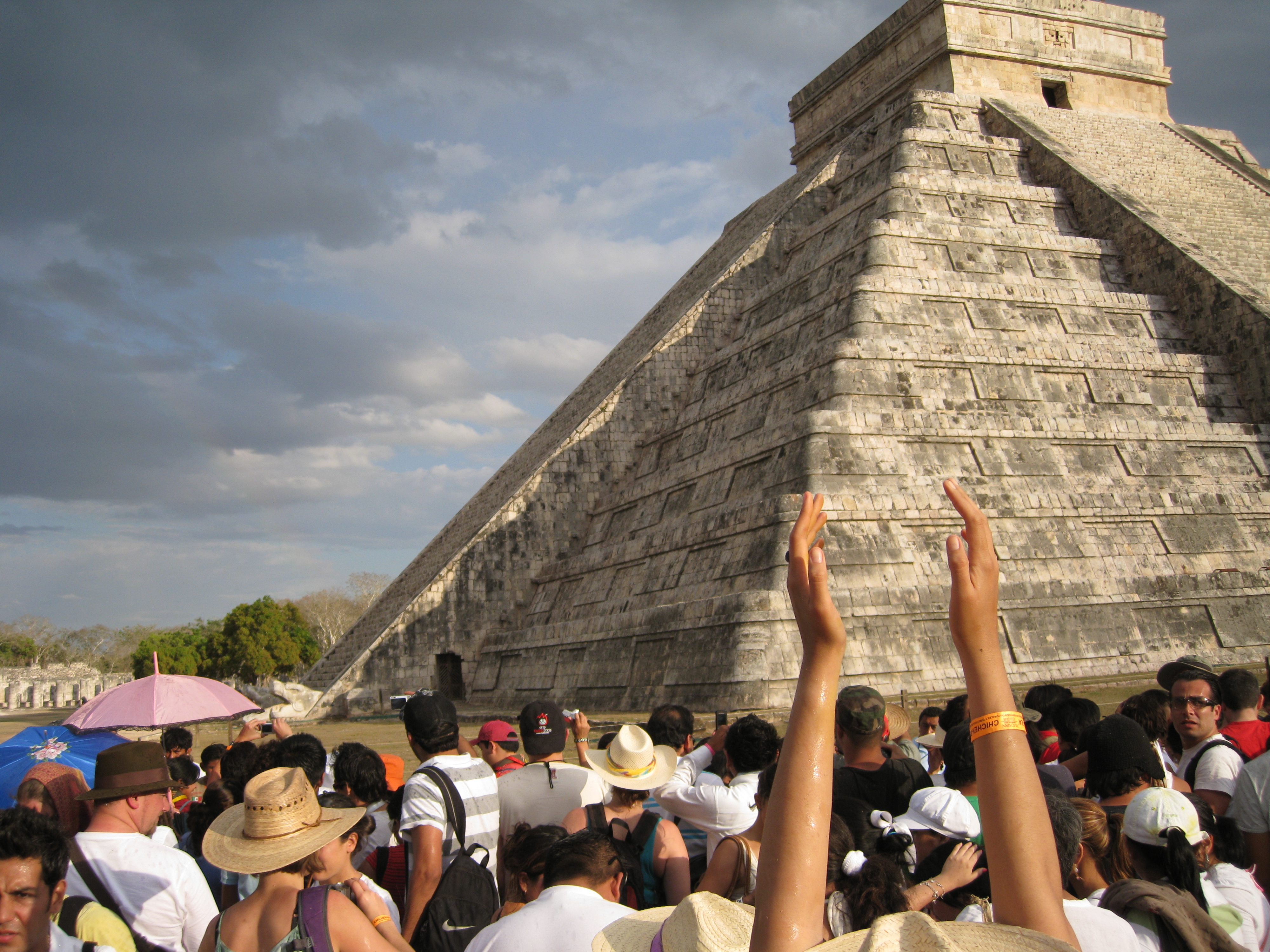
Serpent visible during the spring equinox at the Temple of Kukulcan, Chichen Itza.
These ancient builders and mathematicians often leave me in awe of their architectures and their knowledge of the sky. To be able to build such a structure in the ancient time, and to be able to calculate the timing of the Sun and the angle of building to such precision so that you will see as if a serpent slithering down the steps are just amazing!
Carnival of Space #145
•March 18, 2010 • Leave a CommentCarnival of Space number 145 is up now at Crowlspace.
GLOBE at Night 2010
•March 10, 2010 • Leave a CommentYou know Orion? Yes, that Orion the hunter who lies among the stars with its prominent three belt stars that is usually the only constellation a non-stargazer known of.
Constellation Orion is visible in the night sky now, and you can easily spot it as soon as the sky gets dark provided, of course, that the sky condition in your area allows you to see stars. So how bad is the light pollution in your area? Researchers want to know. They also want to explore the concept of light pollution and to research the patterns of light pollution across the globe.
Now, we all can help in this research in an annual 2-week campaign called GLOBE at Night. Between now and March 16, go out, look up, find Orion and compare what you see with the magnitude chart provided and then report your findings online.

Light pollution is one of our biggest stargazing enemies. They not only drown the stars and destroy our view of the night sky, but also wasted a lot of unnecessary energy. A lot of people never realise that, to them, lighting is just lighting, as long as they let people see in the dark, not many of us really realised (or don’t care) that sometime most of the light wasted in lighting up other things that do not required to be lighted, such as the night sky. Hopefully project like GLOBE at Night will help a lot of people realise that stars are missing from the night sky because of our irresponsible lightings.
The GLOBE at Night website have all the information you need to get started, so go out and tell the world how good (or bad) your night sky is!
100,000,000,000,000 bits of Mars Data
•March 5, 2010 • Leave a Comment
Pitted Layers Northeast of Hellas Region.
Credit: NASA/JPL/University of Arizona
100 terabits = 100,000,000,000,000 bits. It’s not difficult to comprehend that figure today, but few decades ago this amount of data volume is just unimaginable, the time when we were still using diskettes (floppy disks) of few hundreds KB.
And this incredible amount of information is what the Mars Reconnaissance Orbiter (MRO) had sent back to us. It is more than three times the amount of data from all other deep-space mission – mission that has flown past the Moon’s orbit – combined. More important about this data is not just the quantity, but the quality of what they tell us about Mars, about its environments and how they changed over time.
MRO is going to complete its fourth year at Mars on March 10. Hopefully it’ll continue to stay healthy and help us learn more about our neighbour so that one day when we put our feet down on its surface, we’ll know how to survive there.
My Trip to Langkawi National Observatory (LNO)
•February 28, 2010 • 2 CommentsAs mentioned in the previous post, I spent the days before Chinese New Year at the Langkawi National Observatory (LNO). LNO is located at Langkawi Island, the northern part of Peninsular Malaysia. The observatory houses a 20” RC telescope at its Stellar Observatory and 2 units of 6” refractor as its main telescope in the Solar Observatory.

Click here for more pictures
I spent 3 nights awake at the observatory and the rest of the days sleeping. Although occasionally there were some clouds, overall the weather can be considered good. With only a camera and a tripod, I don’t have much choice of the type of images to shoot, so I stick to taking star trails of the constellations.
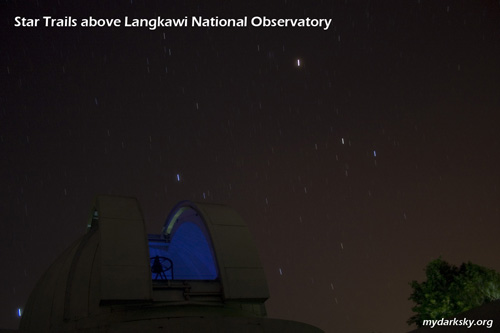
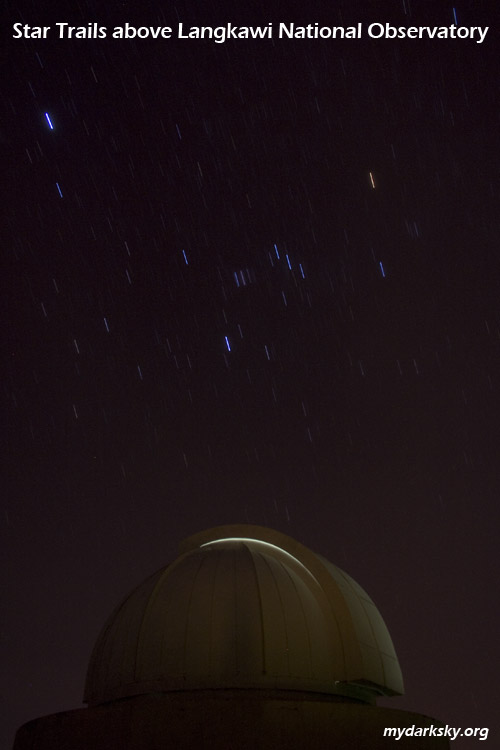

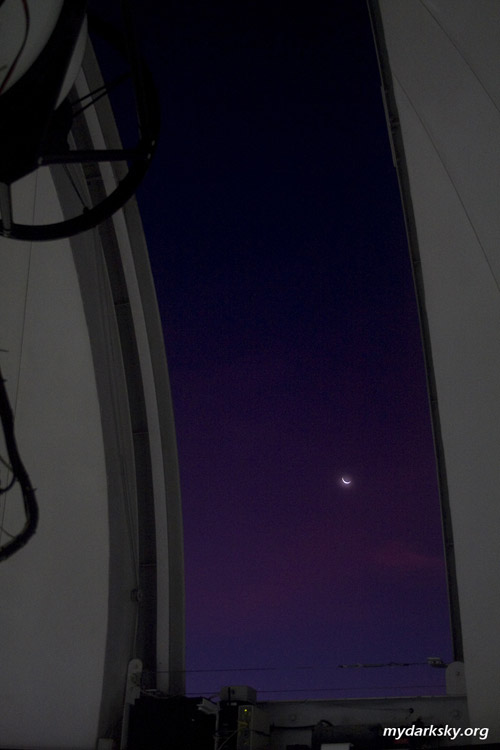
Click here for more images
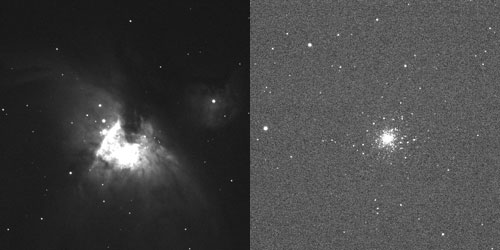
I was fortunate, however, to have the chance to play around with the 20” telescope, and it was fun! Everything is computerised so I mainly click around the PC and set the telescope in motion. I even tried to take a few images through its CCD camera and fiddled around with its filters. Easily, within seconds, I got my object. I’m no expect in image processing, thus have no idea at all how to process the images. I post two of the images straight from the camera here (M42 & M79), just for fun.
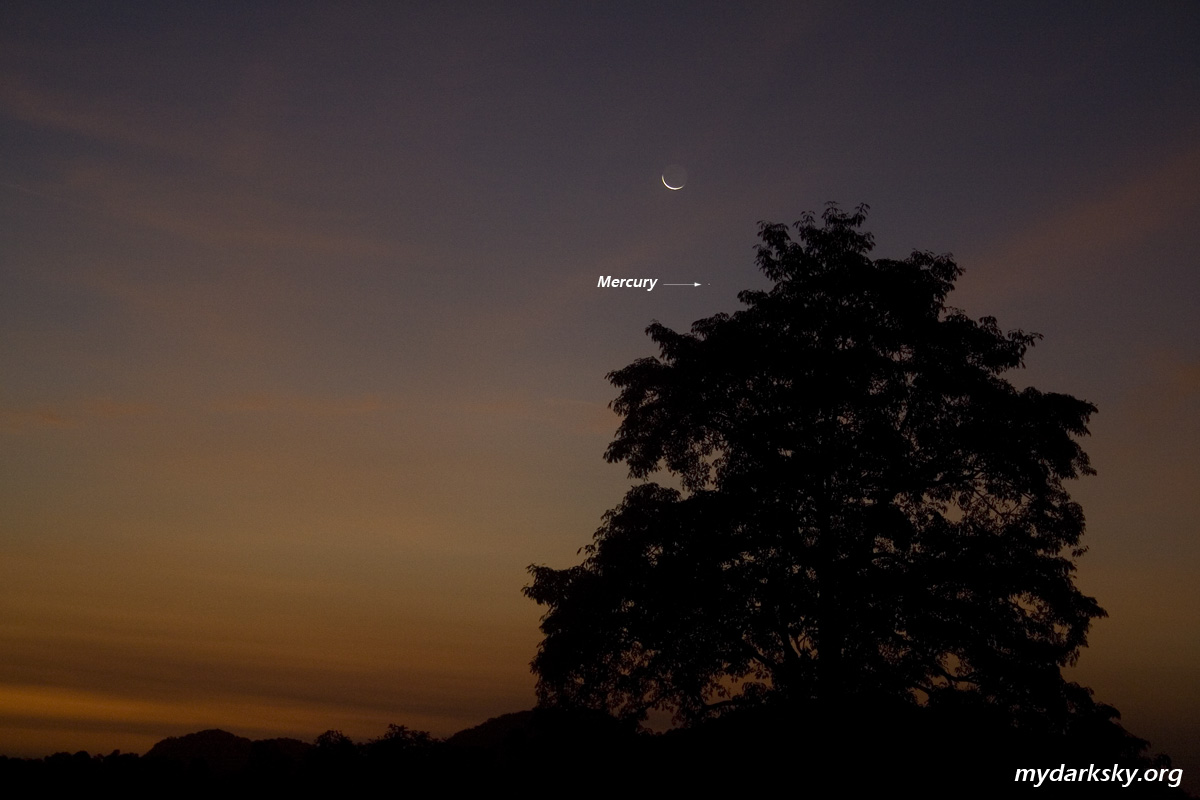
The best part of this trip was I saw Mercury in one of the mornings while shooting the crescent Moon. OK, it didn’t sound like a big deal, but to me, it was the first time I saw Mercury! Can you believe it?? After 10 years of observation, this was my first time seeing the innermost planet!
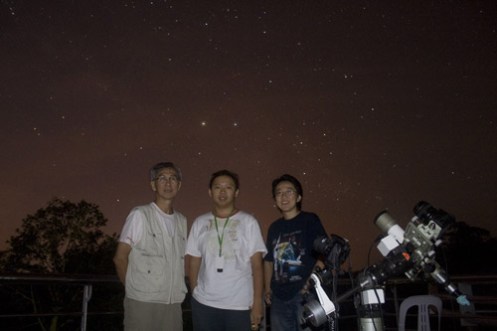
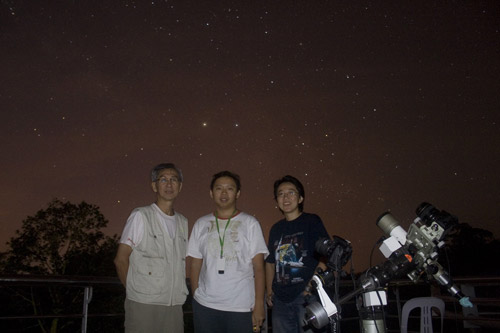
All in all, it was a nice trip to the observatory, although biologically I messed up my system by not having proper meals, waking at night and sleeping in the day.
Carnival of Space #142
•February 25, 2010 • Leave a CommentAfter I had posted the past two week’s carnival yesterday, this morning another carnival arrived… this time is held at Astroblog. Time for more spacy news…



 My Dark Sky
You must be logged in to post a comment.