Ringless Saturn

•December 30, 2008 • Leave a Comment

It’s 2 am. You wake up in the middle of the night. You have a plan. You want to see Saturn. You go outside and look up. Good, the sky is clear. You can see Leo the Lion rising above the eastern horizon. Near the Lion’s tail, you see a bright yellowish “star”. You know that’s Saturn. You point your little 4.5-inch telescope at the ringed planet, longing to see its magnificent rings again.

Something is not right…

You look up at the sky again. You refer to a star chart. You re-aim and look through your scope again. You are very sure that the bright disk you see is Saturn, but that’s not the planet you’re expecting to see. All you see is a just a bright round disk…

Where are the rings???

No fear, the rings are still there, just that they are not so easily visible nowadays on Earth.

What happen is that now we are approaching a time called the “ring plane crossing” period. This is the time when Saturn’s rings appear edge-on to us and disappeared from view.

saturn-rings-changing-aspect1

As seen from Earth, Saturn’s rings are tilted at an angle of 27 degrees. As the planet orbits around the Sun, there will be times when the rings are tilted maximum to us, and times when we will see the rings edge-on. And since Saturn’s rings are so thin (about 0.2 to 3 km only!), when they are edge-on, the rings just disappear from sight.

We are now only approaching the ring plane crossing and not there yet. The precise ring plane crossing (opening angle of the rings = 0 degree) won’t happen until September 4, 2009.

Currently, the opening angle of the rings is about 1 degree. In January next year, the rings will temporary open up again until mid-May to a maximum of 4 degrees due to the orbital motion of our planet and the ringed planet, before it narrows down to zero degree in September. But don’t wait until then to see “naked Saturn” though, because the planet will be too close to the Sun to observe.

So the best time to not see Saturn rings is right now!

And since the rings are not totally edge-on now, if the sky is clear and the atmosphere is steady, look carefully and you might catch a glimpse of the shadowy thin rings cutting Saturn into halves.

Edge-on Saturn by Paulo Casquinha

Edge-on Saturn: amateur astronomer Paulo Casquinha took this picture on Dec 25, 2008 from his backyard observatory in Quinta do Anjo, Portugal. Extract from SpaceWeather.com

Hubble’s View of the Universe at The Big Picture

•December 25, 2008 • Leave a Comment

Merry Christmas to everyone out there!!

And today, the last photo for the Hubble Space Telescope Advent Calendar 2008 at The Big Picture will be posted, finishing its series of 25 photos posted since December 1.

Go and take a look, and you’ll see how amazing our universe can be, and how good we are at trying to understanding it.

antennae-galaxies

The Big Picture

•December 24, 2008 • Leave a Comment

If you want hi-res images which cover almost everything under the sky and up in the sky, then The Big Picture at Boston Globe is the place to go (I’ve added the link to the sidebar).

Really, the images there are incredible! They showcase the cultures of different countries, religions, history, art, health, nature, environment, natural disaster (such as volcanoes, hurricanes, and earthquakes), war, sports and the beauty beyond our planet.

Take your time and slowly go through the archives (which is quite a lot, but I think is very much worth your time, trust me, you’ll not regret it). But personally, I would like to highlight a few of my favourites (and of course, I’m biased, they are mostly astronomy related…)

p/s: all these images are hi-res, so it may take some time to load, but it’s worth the waiting. 

The Sun

 The Sun

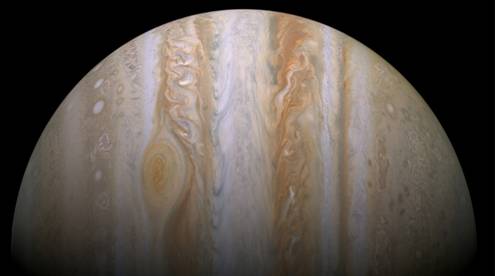
View of Jupiter

View of Jupiter

Total Solar Eclipse of 2008

 Total Solar Eclipse of 2008

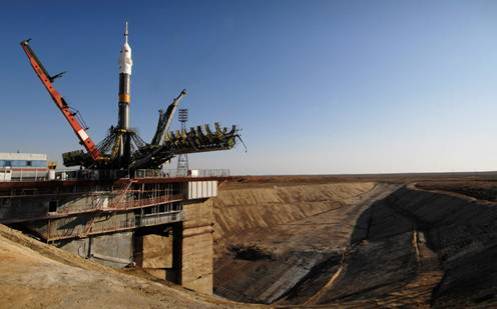
The Baikonur Cosmodrome

 The Baikonur Cosmodrome

The Sky from Above

 The Sky from Above

Earth from Above

 Earth from Above

Hurricane Ike

 Hurricane Ike

Peering into the Micro-World

 Peering into the Micro-World

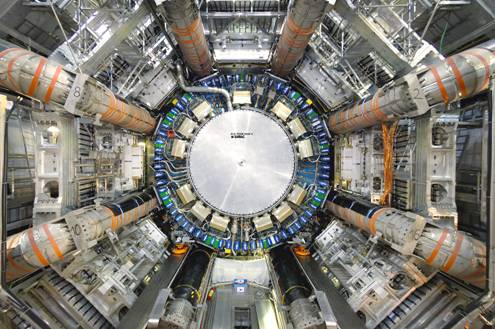
The Large Hadron Collider

 The Large Hadron Collider

Carnival of Space #83 & 84

•December 23, 2008 • Leave a Comment

Carnival of Space #83 is on last last week at Astroblog.

Carnival of Space #84 is on last week at Next Big Future.

Sorry for the late postings of the Carnival…

Carnival of Space #85 is going to be on this week. Stay tuned!

Happy Winter Solstice! and Happy Holidays!

•December 21, 2008 • Leave a Comment

Happy Winter Solstice!

Today is the winter solstice – the time when the position of the Sun is farthest south of the celestial equator as seen against the background stars in the constellation of Sagittarius.

It is widely recognise as the beginning of winter in the Northern Hemisphere and summer in the Southern Hemisphere. However, to us at the equator, many people will not notice any different; it’s summer all year long.

To the Chinese, however, there is a festival to celebrate – the DongZhi Festival 冬至. Traditionally, the Dongzhi Festival is also a time for the family to get together. One activity during these get together is the making and eating of “tangyuan” 汤圆 or balls of glutinous rice, which symbolise reunion.

This is the time of the year when people will take long vacation. The usual reason is to “clear leaves” because most companies do not allow leaves to carry forward to the next year. Just last Friday, most of the colleagues I met said this to me: “Goodbye, Merry Christmas and see you next year!”.

Within these two weeks, there are a number of festivals to celebrate. The DongZhi Festival for the Chinese on the 21st, Merry Christmas for the Christians on the 25th, Awal Muharam (new year of the Islamic calendar) for the Muslims on the 29th, and Happy 2009 Year for everybody.

It’s good to have long vacation, especially during school holiday season. You can spend more time with your children and family, go back hometown and visit your parents, go somewhere for holidays, and throw away all your work until next year.

Unfortunately for me, I’d spent almost all of my annual leaves and there are heaps of stuffs waiting to be done. No long holidays for me this season :-( . But with all the public holidays, I still have time to go back home and visit my parents, which is great!

So, to everyone out there: Happy Winter Solstice! 冬至快乐! Merry Christmas! Happy New Year! Happy Holidays! and Clear Skies!

Jupiter and Ganymede

•December 21, 2008 • Leave a Comment

Another gem from Hubble…

Jupiter & Ganymede. Click to enlarge.

The Hubble Space Telescope caught Jupiter’s largest moon Ganymede just before it ducks behind the giant planet. Credit: NASA, ESA, and E. Karkoschka (University of Arizona).

Just look at the size of these objects – Ganymede is the largest of all moons in our Solar System; it’s even larger than Mercury! (For those who needs number to imagine the size, Ganymede measures 5268 km across and Mercury is 4878 km across). The only reason it’s called a moon and not a planet is because it doesn’t orbit our Sun, instead it orbits Jupiter.

And when this largest moon stands beside its mighty parent planet, it was totally dwarfed! Ganymede can’t even compete in size with the Great Red Spot (which is just only a feature on Jupiter), leave alone the whole planet.

A lot of features are visible on the Jupiter in the image above: the Great Red Spot (visible near the centre of the image) – a storm which has been on Jupiter for more than 3 centuries, texture of the clouds in the atmosphere and other smaller storms and vortices.

The most amazing thing here is not the features on Jupiter – Jupiter is big, so its features are easily visible. What is amazing is that Hubble’s view is so sharp that we can even see features on the moon’s surface, most notably is the white impact crater Tros.

No matter how beautiful a Hubble image is, it must be taken for a scientific reason. Observation time on Hubble is too precious to use only to take pretty pictures. In this case, astronomer Karkoschka uses these images to study Jupiter’s upper atmosphere.

As bright Ganymede goes behind Jupiter, it’ll first pass through Jupiter’s atmosphere and at the same time illuminate the atmosphere. If we compare how Ganymede looks like when alone in space and when it’s near the limb of the giant planet, we can get some clues about the properties of Jupiter’s high-altitude haze above the cloud tops.

And as if still image is not enough to take our breath away, the astronomers at Hubble took the series of these images and made them into an animation! Wow!

How to Observe Meteor Shower?

•December 12, 2008 • 1 Comment

All you need to enjoy a meteor shower is just your naked eyes. No equipment is needed!

First, of course, you have to know when a meteor shower is going to put on a show. A good place to look up for the date and information on meteor showers is the International Meteor Organization site.

Theoretically, you can observe a show of meteor shower anywhere on Earth (as long as it’s night time). However, if you go to an unobstructed dark site – away from city lights or vehicle headlights – to observe, it’ll increase your chances to see more meteors because the dimmer ones will be visible and not washed out by light pollution.

But no matter how hard we tried to avoid man-made light polluters, there is one from nature that we can’t avoid – our Moon… especially when is anywhere near gibbous or full moon time.

Having said all that, in the end, the numbers of meteor visible will still have to depend on the weather.

If you wish to go to the dark to observe, please bring along some friends – it’ll definitely be merrier, but the most important point here is safety; it’s safer to have more people around.

When you reach the observing site, you may want to find a place that is not easily disturbed (or sometime easily “stepped”) by others. You can check your direction and use the star chart to find the location of the shower’s radiant in the sky.

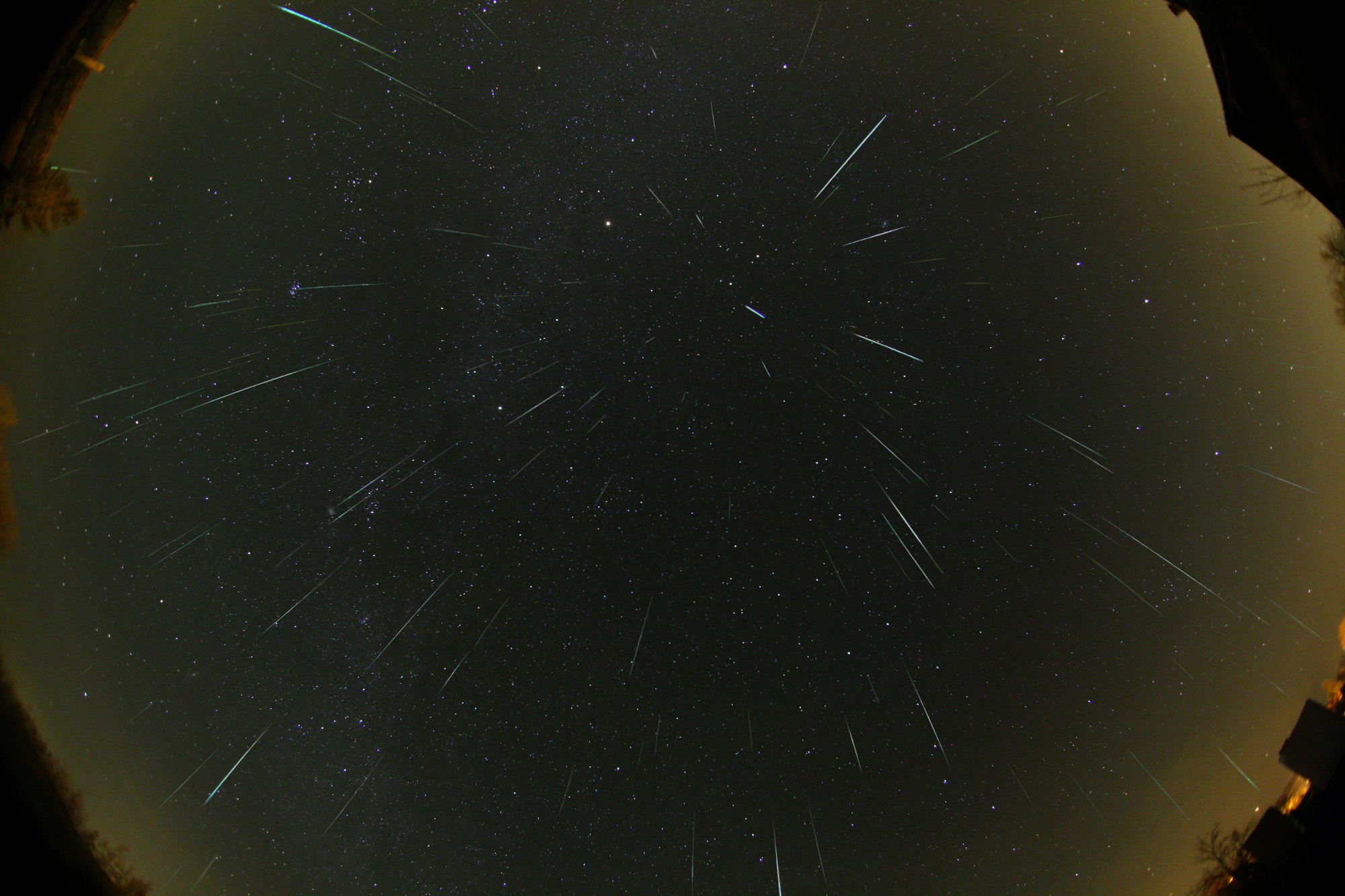
Geminids by Erno Berko
This composite image of Geminids was recorded over four nights in 2007 by astronomer Erno Berko. Clearly seen from the image is that all the meteors were radiating from a point, i.e. the radiant. Source: APOD.

Actually, if you just want to see some meteors, you don’t really need to know where is the shower’s radiant. From the image above, we can see that the meteors do not always appear to begin at the radiant. The meteors usually already left the radiant by the time we saw them. It is just that when we trace back the route of the meteors, they seem to converge there.

So meteors actually will streak all over the night sky, not just only in the direction of the radiant. Conclusion: don’t stare right at the radiant; you surely will miss out a lot of meteors over your head.

If so, then what is that radiant for? The location of the radiant is useful when you want to know whether a particular meteor belongs to the shower you are observing or not. Trace back the route of the meteor – if it ends up at the radiant, then it belongs to the shower; if not, then it may be a sporadic meteor or belongs to other minor meteor shower that may also active during that time.

Knowing when the radiant will be above the horizon also will help to increase our chances of seeing more meteors. Other than that, I think for us who just want to enjoy a meteor shower show, the radiant is really not so important.

To make yourself comfortable during the observation, bring along a mat to lie down. Lying flat on the ground is the best position because like this we can cover the maximum area of the sky. This position is a bit “dangerous” though, because this is also the best position to fall asleep and the next thing you know might be the Sun rising. Try chit-chatting with friends, this will help to keep you awake, but make sure that your eyes are glue to the sky; you won’t want to miss the show.

Sometime it may be cold in the middle of the night, so a jacket or even a blanket may come in handy. Mosquito repellent is also something useful to bring along. Better still if you can prepare some foods and drinks to fill up your empty stomach during the night. How nice to have a cup of hot coffee in the middle of a cold night!

In a nutshell: know your timing, pick a good safe site, lie down, and enjoy the celestial fireworks!