It’s August, so is Perseids time!
Perseid meteor shower, one of the most reliable meteor shower, is here now. This shower is active from July 17 to August 24. Starting slowly, with just a few meteors per hour, it’ll peak to a ZHR of 100 meteors on August 12, and then slowly subside again to a few meteors per hour.

This bright and colourful fireball meteor flashed through skies over Japan on August 12, 2004. Ending at the upper right, the meteor’s trail points down and to the left, back to the shower’s radiant point between the constellations of Perseus and Cassiopeia. The Pleiades star cluster (M45) is also visible below the meteor’s trail. Source: Astronomy Picture of the Day.
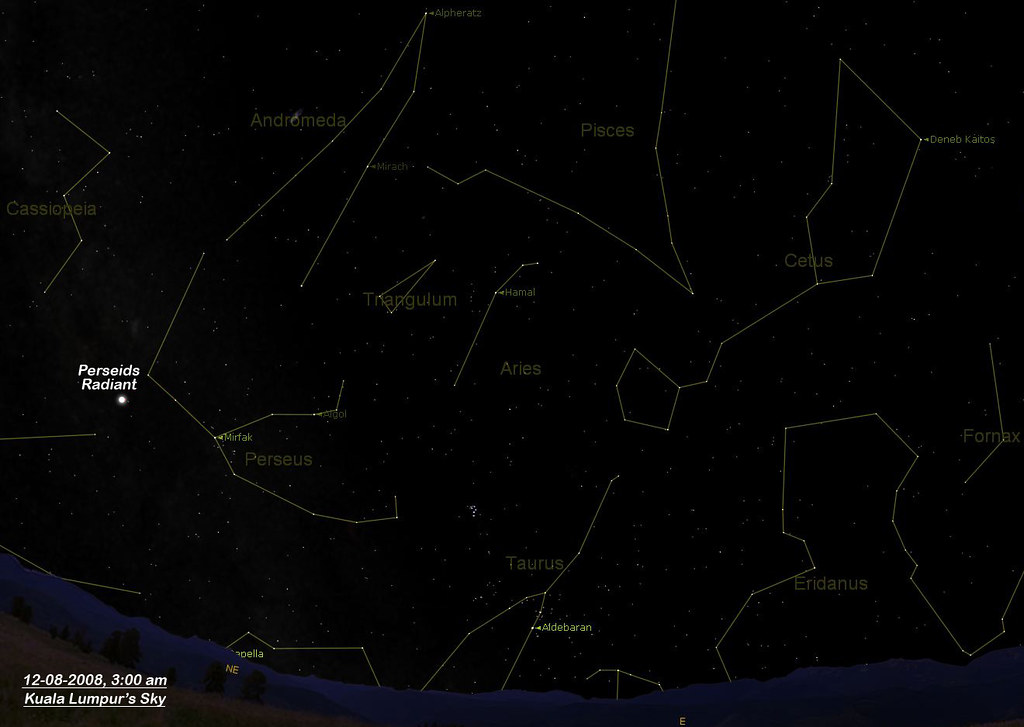
This year, we have a gibbous Moon during the shower peak on Aug 12. But it’s ok, since the Moon will set around 3 am and is when the perseids radiant rises to reasonable height for observation. So, before 3 am, the observable meteors will be less because the “spotlight” moon will wash out most but the brighter meteors.
Unless you are a hard core meteor chaser, and you are sure you can stay up the whole night, it is advisable to take an early nap and wake up around 2 am, when the Moon sets and the radiant rises to fully enjoy the show.

Although the shower peak next Tuesday, we can actually starts observing it anytime now, especially this weekend, when we can stay up late without worrying about unable to wake up for work the next day. Also, because the gibbous Moon set earlier (about 1 am) this weekend compared to Aug 12, meaning we can start our observations earlier.
The source of the Perseids meteor shower is Comet 109P/Swift-Tuttle. Although the comet is now is receding back into the outer Solar System and is nowhere near Earth, the comet’s tail does intersect Earth’s orbit and we glide through it every year in August. Tiny bits of comet dust hit Earth’s atmosphere travelling at about 60 km/s, burns and gives us the Perseids.
Not all meteors that you see are perseids; some may be sporadic (or random) meteors or meteors from another minor shower that is also active during this time – the Delta Aquarids, active from July 12 to August 19 with a ZHR of 20 at its peak.
So how do you know a meteor is a perseid or not? Simple. Just trace back the path of the meteor and see if it ends up in constellation Perseus. If yes, then it’s a perseid; if not, then see if the path ends up Aquarids. If yes, then it’s a Delta Aquarid meteor; if not, then it is just a sporadic meteor.
Remember, you don’t need any equipment such as telescope to see meteors. All you need is just your naked eyes.
To observed, find a group of at least 5 people, go to a SAFE, dark and unobstructed site, away from city light or any man-made light polluter. The darker the site, the more dimmer meteors is going to be visible (although in the end the number of meteor visible is strongly dependent on the weather).
Although the meteors are said to come from the radiant, meteors actually can be seen all over the night sky, not just only in the direction of Perseus. It is just that when you trace back the route of the meteors, they seem to converage to a point, i.e. the radiant. So, don’t stare right at the radiant; you surely will miss out a lot of meteors over your head.
To make yourself comfortable, bring along mat to lie down. Lying down flat on the ground is the best position so that we can cover the maximum area of the sky. This position is a bit “dangerous” though, because this is also the best position to fall asleep and the next thing you know might be the Sun rising. Try chit-chatting with friends, this will help to keep you awake, but make sure that your eyes are glue to the sky; you won’t want to miss the show.
Sometime it may be cold in the middle of the night, so a jacket may come in handy. Better still if you can prepare some food and drinks to fill up your empty stomach during the night. Mosquito repellent may also be something useful to bring along.
Hopefully the weather will be fine and clear skies to everyone out there!
To learn more about meteor and meteor shower, go to Meteor Shower ABC.
Posted in Observations & Tips
Tags: Meteor shower

 Many of us may not know it, but every 97 minutes, the Hubble Space Telescope (HST) makes a complete orbit around our planet. Orbit by orbit, Hubble has given us splendid pictures of the universe since it was launched in 1990.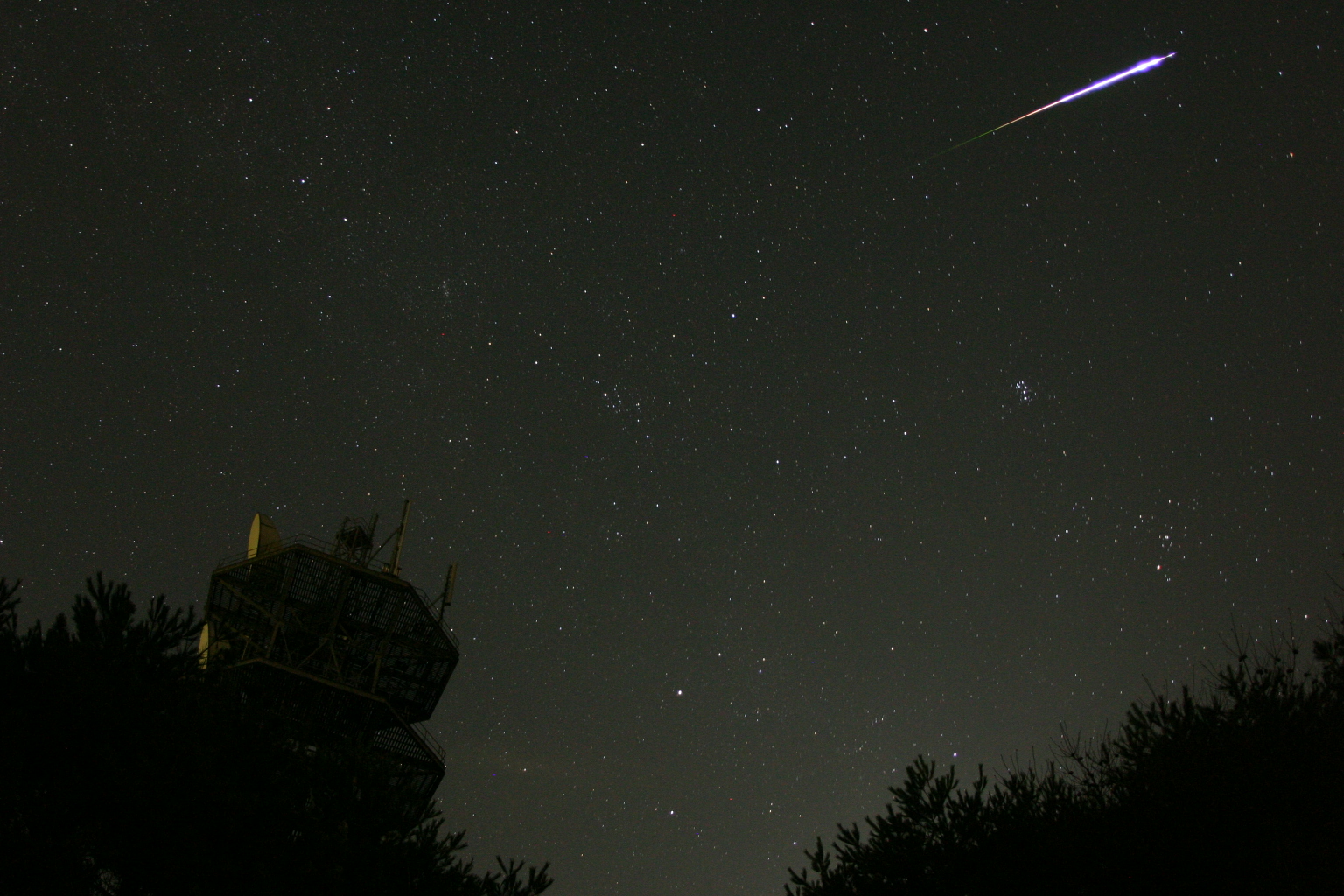

 On 1 August 2008, our Moon will pass directly in front of our Sun. This is known as total solar eclipse.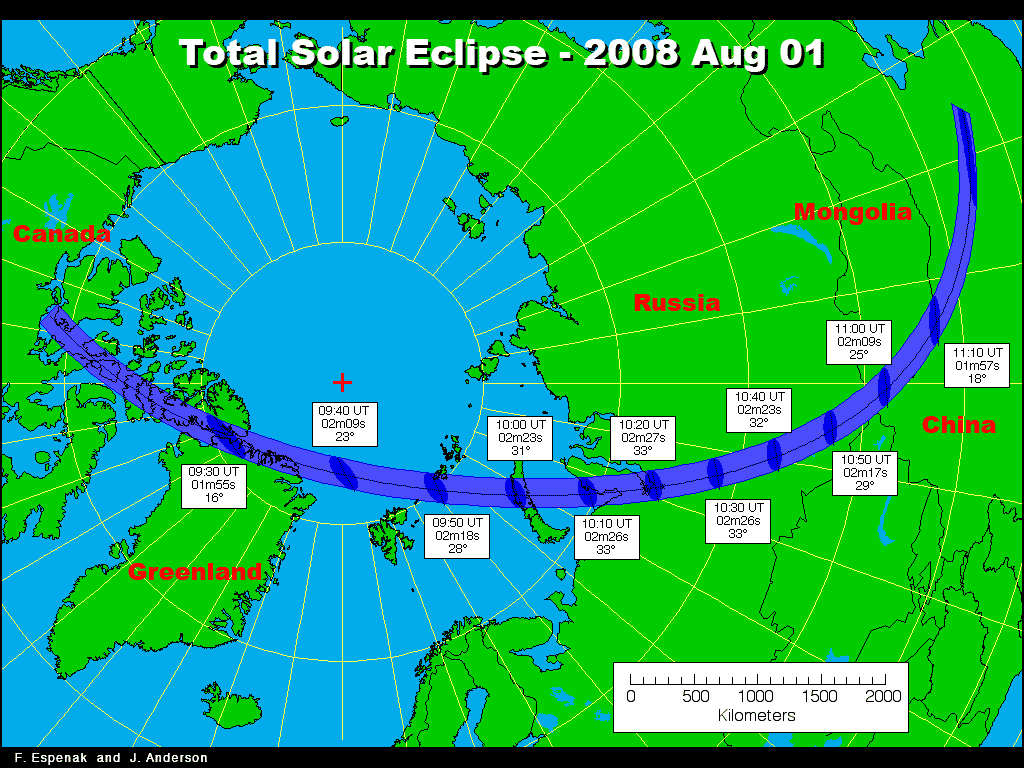




 My Dark Sky
You must be logged in to post a comment.