View of Our Home Planet and Companion

•October 17, 2009 • Leave a Comment

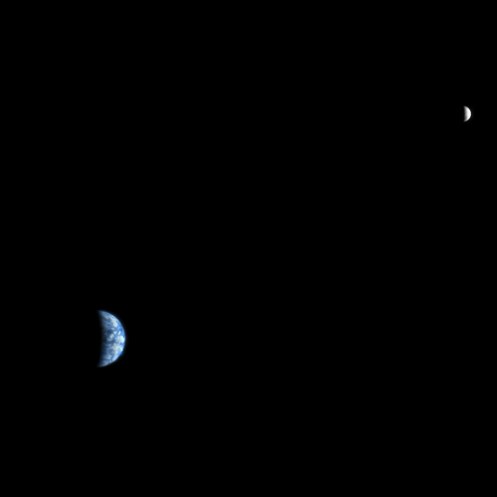
Few days ago, I showed some pretty pictures of Mars in high resolution by HiRISE. But HiRISE is not just good in looking at Mars; it can also see other planets, such as

Earth and Moon by HiRISE. Credit: NASA/JPL/University of Arizona.

us…

This is an old picture taken back in October 2007 at a distance of 142 million km. That time the Japanese moon probe Kaguya was just on its way to the Moon (Kaguya had already finished its mission by smashing itself onto the Moon on June 10, 2009).

Dearest Home and Faithful Companion against a black emptiness of space.

Beautiful…

Constellation Series by MyDarkSky

•October 16, 2009 • Leave a Comment

I’ve been writing constellation articles for a local astronomy club – Starfinder Astronomical Society bimonthly newsletter for quite some time now. After 5 years of writing, I had quite a number of articles sitting in my computer. Except for the members of Starfinder, I don’t think anyone else had read my articles before.

What a waste… rather than just keeping the articles in my hard drive, why not I repost them here and share it with everyone who is interested.

“Good idea*”, I said to myself and so there you go again: at the sidebar under Pages now you can see I had added another new page called “Constellation Series”. I still need some time to reedit the articles and add in some extra information, so currently there is only one constellation, but more to come in the future. Stay tuned!

*p/s: I seem to be getting a lot of good ideas nowadays…

Carnival of Space #124

•October 14, 2009 • Leave a Comment

This week Carnival is at We are all in the Gutter. Go and take a look.

Mars in High Resolutions

•October 13, 2009 • 1 Comment

This is for Mars’ fans…

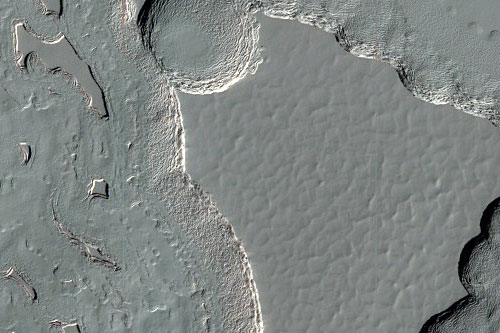
Flows in the Aeolis Region

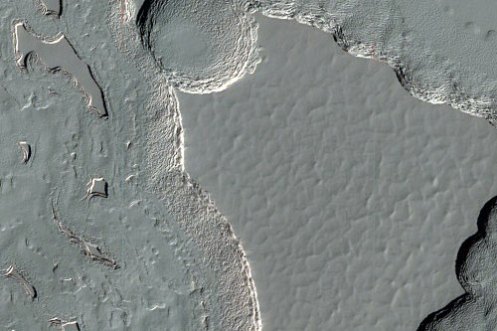
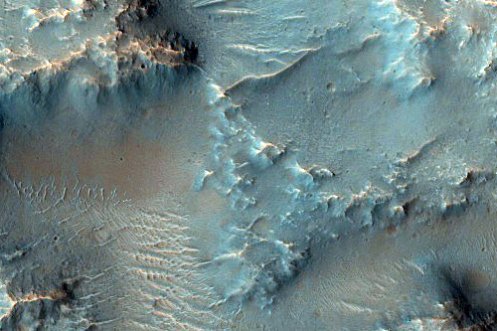
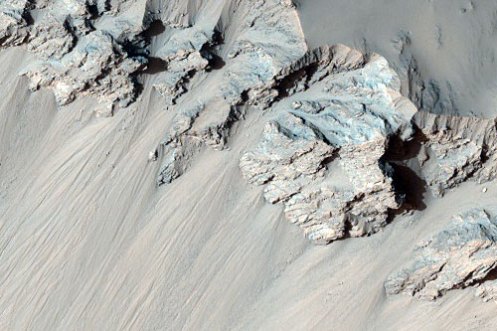
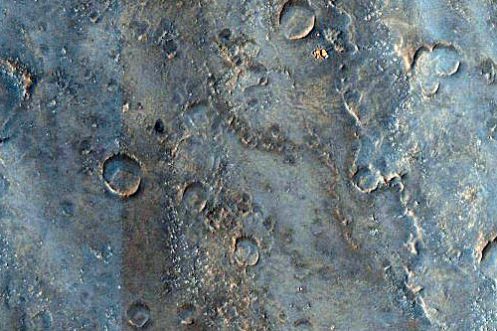
Last month the HiSIRE camera onboard Mars Reconnaissance Orbiter (MRO) released thousands of images of Mars, showing a wide range of gullies, dunes, craters, geological layering and other features on the Red Planet.

Flows in the Aeolis Region

HiRISE stands for High Resolution Imaging Science Experiment. I don’t need to say more – the name itself already tells you that these images are of high resolution. Each full image covers a strip of Martian ground 6 km wide, about two to four times that long, showing details as small as 1 meter across!

If you have the time, go and drown yourself in the images.

 Hydrated Crater in Tyrrhena Terra

Columnar Jointing in Wall of Impact Crater

Tharsis Region Target

Here be Dragons

•October 11, 2009 • Leave a Comment

“Here be dragons”. I like this phrase although this is not something common we heard here.

In ancient time, unexplored and unknown territories were often be given stories like “here be dragons”. We human don’t like unknown; unknown made us insecure, they were frightening, so be able to given some legends to them will made the unknown “known” and help to provide at least some comforts.

Why I mentioned this? It’s just to provide an opening to the picture I’m going to link to at Universe Today. A picture of our little robot Opportunity took on Mars showing a “dragon” and fittingly, Mars to us is still largely an unknown world.

Go and take a look at Here be Dragons on Mars!

Saturn’s Rings are Much Larger than You Can See

•October 10, 2009 • Leave a Comment

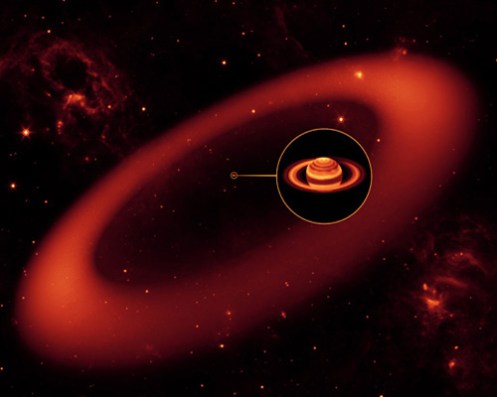
Saturn’s rings are gorgeous – I think no one will disagree with me… these rings are easily visible through small telescope. But what you can see are just the “small” rings. Recently the Spitzer Space Telescope has spied an enormous ring around Saturn, by far the largest of its many rings.
Saturn Rings-Spitzer1

This artist’s conception shows a nearly invisible ring around Saturn — the largest of the giant planet’s many rings. It was discovered by NASA’s Spitzer Space Telescope.
Credit: NASA/JPL-Caltech/Keck.

This new ring is about 6 million km away from Saturn and extends outward roughly another 12 million km. Phoebe, one of Saturn’s farthest moons, circles within this ring, and is likely to be the source of its material.

The ring is tenuous, made up of a sparse collection of ice and dust particles. If you could transport yourself to the ring, you wouldn’t even know you were there because the particles are so far apart. It’s difficult to see in visible light – the relatively small numbers of particles in the ring wouldn’t reflect much visible light, especially out at Saturn where sunlight is weak. That’s why it takes so long to find something this big. However, if we look in infrared, then it’s a different story. With Spitzer’s infrared eyes we were able to spot the glow of the ring’s cool dust.
Saturn Rings-Spitzer2

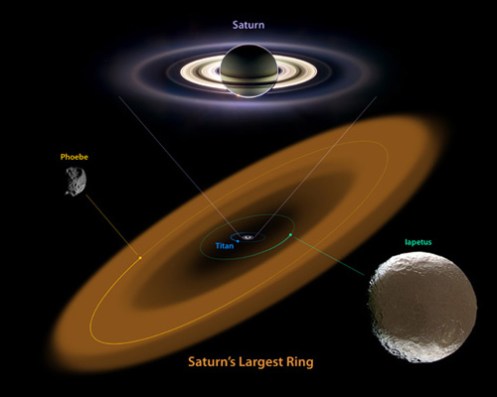
This diagram illustrates the extent of the largest ring around Saturn. The moon Phoebe circles within this ring. The pictures of Saturn, Phoebe and Iapetus were taken by NASA’s Cassini spacecraft. The ring is an artist’s illustration.
Credit: NASA/JPL-Caltech.

The discovery of this ring was no accident: astronomers were purposely searching for it hoping to solve an age-old riddle of Saturn’s third largest moon Iapetus. Iapetus has a strange look. It has one bright side and the other really dark side – a yin-yang moon, why?

Astronomers have long suspected that there is a connection between Phoebe and the dark material on Iapetus. They had a hunch that Phoebe might be circling around in a belt of dust kicked up from its minor collisions with comets. Sure enough, when they took a first look at their Spitzer data, a band of dust jumped out.

The discovery of this new ring provides convincing evidence of the relationship. The ring is circling in the same direction as Phoebe, while Iapetus is going the opposite way. According to the scientists, some of the dark and dusty material from the outer ring moves inward toward Iapetus, and slam the icy moon like bugs on a windshield.

So there you go, another mystery solved…

LCROSS to Smash onto the Moon Today

•October 9, 2009 • Leave a Comment

This evening, at 7:30 pm (11:30 UT), LCROSS and its Centaur booster rocket will smack into the deep crater at the south pole of our Moon, hopefully to kick up some debris containing sign of water.

When I wrote about this last month, the target crater was Cabeus A. But on September 29, the team announced that they have shifted the target crater to Cabeus (proper) based on new analysis of available lunar data including observations from Lunar Reconnaissance Orbiter (LRO), Lunar Prospector (LP), Chandrayaan-1 and JAXA’s Kaguya spacecraft.

Moon-SouthPole2

There has been tons of information on the web regarding this impact and how we can observe it. There’s no point for me to repeat them here, so I just point you to the site.


A computer-generated preview of the impact